
The single storey brick or timber home on a quarter acre block is still the most common house on Chermside streets, and it is one of the easiest homes to fit cameras to well.
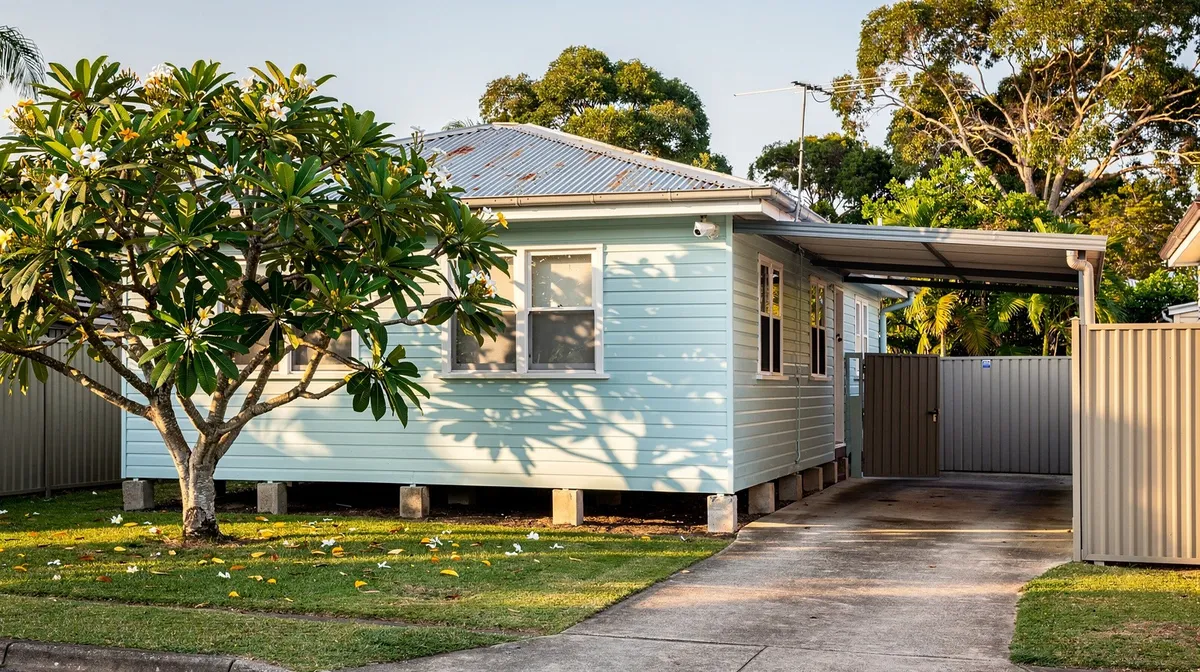
A house built in the 1950s, 60s or 70s with a pitched tile or iron roof usually has a ceiling space you can move through from one end to the other. That means Cat6 can run from a recorder in a hallway cupboard to every corner of the house without a single cable showing outside. The eaves are often low, so cameras end up at a height that records faces rather than hair.
Most of these homes sit near the front of the block, with a driveway down one side, a carport or garage, a front door facing the street and a gate between the house and the side fence. Out the back there is usually a patio, a clothesline, a shed and a long yard. Plenty have had a granny flat or a pool added.
That layout suggests four cameras: the driveway and carport, the front door, the side gate and the back patio. A fifth covers a shed or granny flat if there is one.
Brick veneer has a cavity between the brick and the frame, so cable can drop from the ceiling straight to the camera position with only a small hole outside. Timber homes on stumps are just as simple, and sometimes the subfloor gives a second route.
Solid block extensions and flat roofed patios are the exceptions. There is no cavity to hide cable in, so it runs in a slim channel painted to match, or we choose a different camera spot.
Street lights and a neighbour’s sensor light can wash out a camera at night if it faces them. We check each angle after dark on the day of the install. Colour night vision cameras suit driveways, where the colour of a car or a jacket can matter.
Many of these houses have been raised, extended or rebuilt behind the original front. Where walls are open during a renovation, it is the best time to run cable. Tell us early and we can work with your builder.
See the home installation page for prices and what is included.
Not at all. Cable runs through the ceiling, and where a camera needs to go lower, it can come down inside the wall or along the subfloor.
Under the eave keeps it out of the weather, but on a lowset home that can still be low enough for a good face view. We pick for each spot.
Usually, if the carport is beside the house. A long driveway or a detached garage may need a second camera.
Systems for individual townhouse owners and for whole complexes, with body corporate rules in mind.
Dual LivingCoverage for shared driveways and separate entries, with privacy between the two households.
RentalsWhat landlords and tenants can install, where cameras go and who controls the footage.
Fitted prices, the things that raise a quote, and what a bargain quote tends to leave out.
PlanningThe positions that matter most, when a fifth or sixth camera makes sense and how lens choice changes things.
Buying adviceHow wired, wifi and battery cameras differ, and where each one suits.
QueenslandThe rules for homes, complexes, rentals and businesses, in plain words. Not legal advice.
Cameras and cabling in Chermside West 4032.
4034Cameras and cabling in Geebung 4034.
4053Cameras and cabling in McDowall 4053.
4012Cameras and cabling in Wavell Heights 4012.
4034Cameras and cabling in Zillmere 4034.
4034Cameras and cabling in Aspley 4034.
Tell us a little about the property and we will reply with a written quote that lists every item.
Thanks. Richard (QLD Lic #4930731, ACMA #A058225) now has your details and will check over the job and reply with a written, itemised price within 15 to 30 minutes during trade hours.